
Outback Reforestation
REFORESTATION IN THE NORTHEASTERN OUTBACK
The Outback covers approximately 800,000 km², roughly 10% of the national territory, comprising practically the states of Piauí, Maranhão, Rio Grande do Norte, Ceará, Paraíba, Pernambuco, Sergipe, Alagoas, Bahia, and part of northern Minas Gerais.
The vegetation of the Outback is highly diverse, with different regions — this variation occurs due to rainfall levels, soil fertility, soil types, and topography. There is a division of the Outback between the Agreste and the Sertão. The Agreste is a transition zone between the Atlantic Forest and the dry interior, while the Sertão features more rugged vegetation.
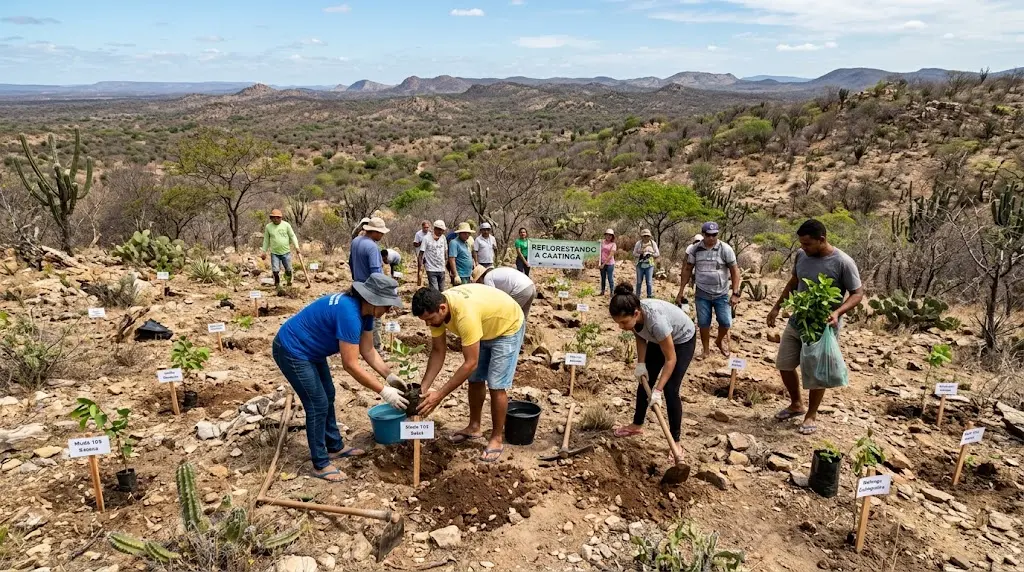
Many people believe that the Outback is a poor biome, because the climate is arid with sparse vegetation. However, the Outback is rich in animal and plant species, many of which are endemic. This Brazilian biome possesses significant biodiversity and must be preserved and valued.
The fauna of the Outback includes 44 species of reptiles, 695 species of birds, 17 species of amphibians, and 120 species of mammals, totaling 876 vertebrate animal species, despite the low density of individuals and endemic species.
The Outback is found in the interior of the Brazilian Northeast, primarily in the semiarid region.
Like other Brazilian biomes, the Outback has been suffering from deforestation and other predatory activities (hunting and unregulated human occupation). Extensive livestock ranching, for example, is one of the main problems today. Without Outback preservation, we may face the extinction of several animal and plant species typical of this biome. Another environmental problem, which is already occurring as a result of deforestation, is the increase of desertification in the Outback.
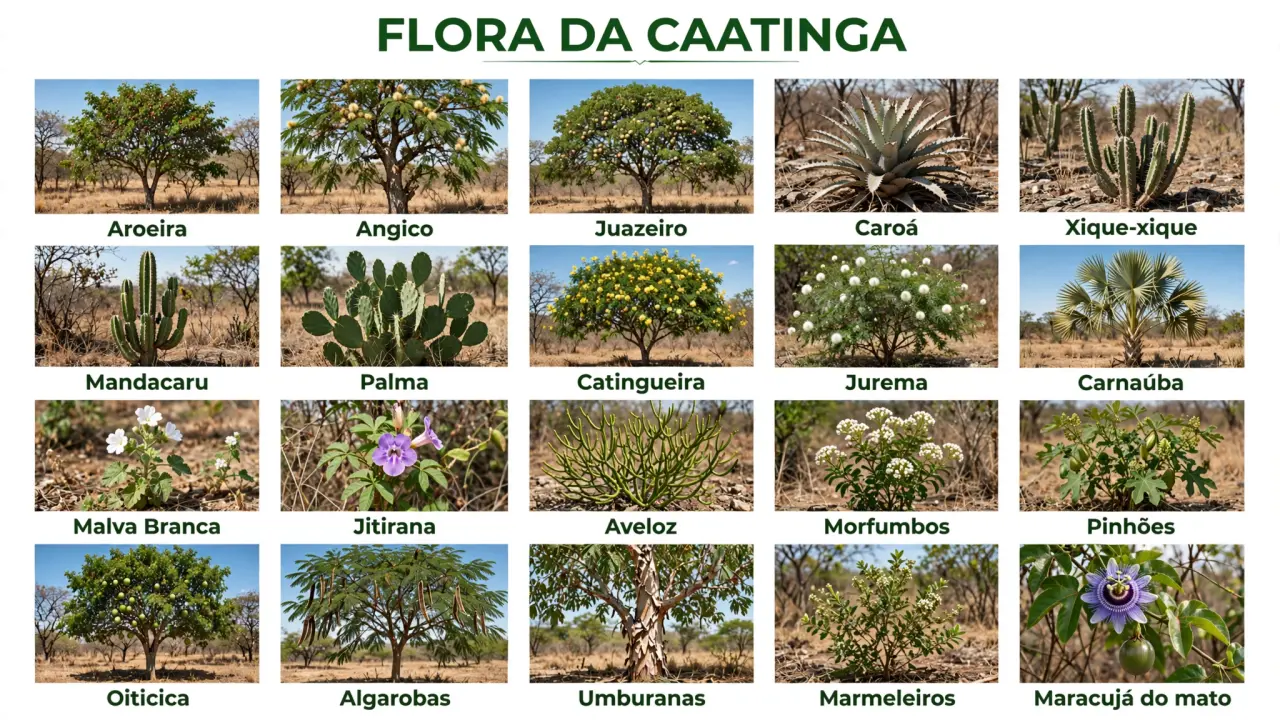
There are various types of plants originating from the northeastern Outback. We wish to highlight some of the most important, where we will carry out reforestation with the following native tree species of the region, including:
THE MAIN PLANTS OF THE OUTBACK:
Aroeira, Angico, Juazeiro, Caroá, Xique-xique, Mandacaru, Palma, Catingueira, Jurema, Carnaúba, Malva Branca, Jitirana, Aveloz, Morfumbos, Pinhões, Oiticica, Algarobas, Umburanas, Marmeleiros, Maracujá do mato.
RESTORATION, PROTECTION AND CONSERVATION PLAN FOR THE NORTHEASTERN OUTBACK
The Oasis in the Outback project demonstrates that through applicable technologies it is possible to restore and reverse the flora degradation of the northeastern Outback through reforestation with various types of native plants. We have a significant environmental protection area dedicated to the renewable reserve. We aim to create a positive environmental impact, reversing all negative actions and transforming them into positive change.
Nature is highly complex and has a fairly rapid capacity for regeneration in response to changes caused by humans or the environment. We will work in harmony with the ecosystem, producing sustainable agribusiness without pollutants. Our objective is to harmonize people, animals, and the environment in a practical and effective manner.
SOME IMPORTANT TYPES OF PLANTS USED IN REFORESTATION
THE CASHEW TREE
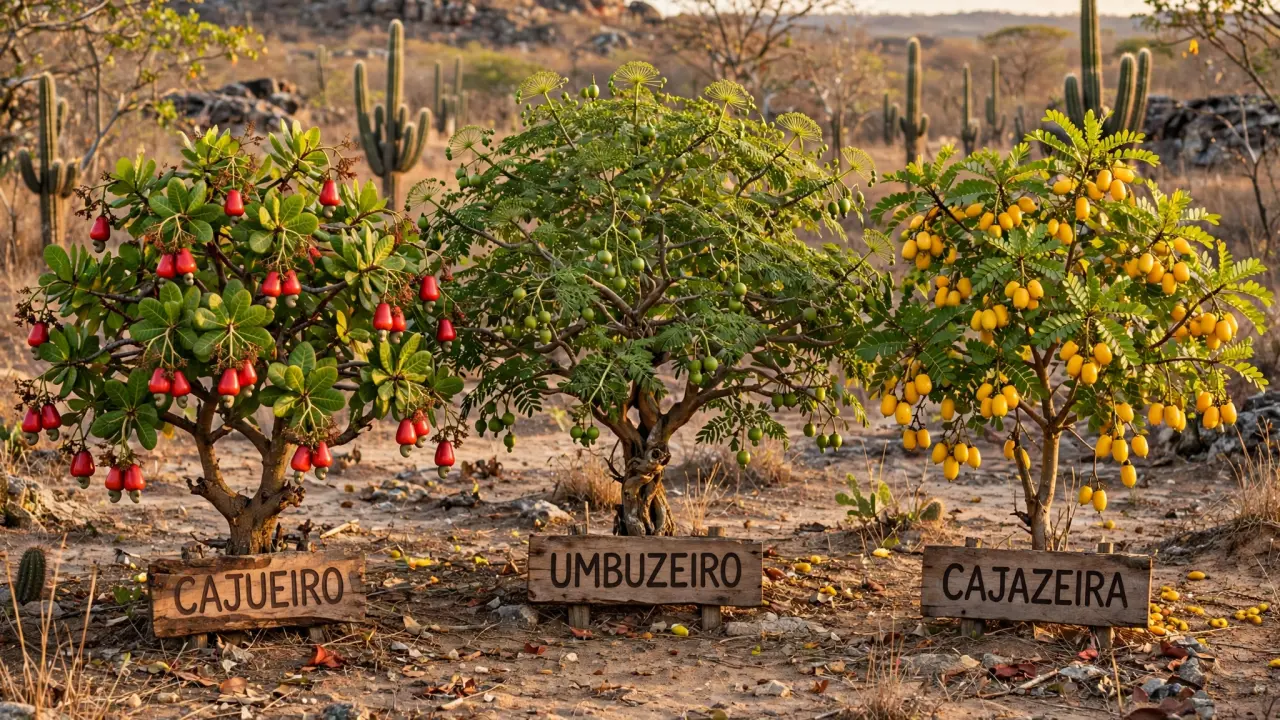
As the name suggests, this is the tree that produces the cashew, a fruit that embodies the look and flavor of the Northeast. The plant is medium-sized and can reach up to 15 meters in height. Its trunk is twisted and its leaves are oval. The tree is found especially in coastal tropical forests. It is worth noting that the world's largest cashew tree is located in the municipality of Parnamirim, in Rio Grande do Norte. Its fruits have many uses. It provides important dimensions for shelter and the survival of many birds and animals. Its fruits, extremely rich in various nutrients, contribute to the well-being of animals.
UMBÚ TREE
The umbuzeiro is a very famous tree in the Northeast and can be found in large quantities in Ceará. It adapts well to drier regions, as it stores water internally, thus withstanding long periods of drought. The fruit of the umbuzeiro, the umbú, is highly valued in the region's cuisine. However, it is only commercially available from January to April, during the rainy season. Its first harvest occurs between 8 to 10 years of age. Extremely rich in vitamins and many other nutrients, it is worthy of scientific study for its health-benefiting properties.
THE CAJA TREE
A plant of the Anacardiaceae family, also known as taperebazeiro, macucu, cajá, cajazeira, cajá-mirim, cajamanga, cajá-manga, taperebá, tamacoaré, tamaquaré-serrado, cajazeiro tapiribá, acaiamiri, acaíba, cajá-pequeno, cajá-miúdo.
The Cajazeira is a large and very leafy tree, with a straight trunk, reaching up to 25 m in height, with bark that is almost always whitish or grayish, thick and deeply fissured; its leaves are imparipinnate, large, alternate, and composed of 5 to 9 pairs of opposite leaflets, oblong-elliptical, acute or obtuse, large; its flowers are fragrant, hermaphroditic, arranged in large terminal panicles; its fruit is a drupe 44 mm in diameter, orange-yellow in color, with resinous, acidic, very fragrant, edible, and healthy pulp.
It is also a medicinal plant, as its fragrant bark is emetic and astringent, serving as an excellent emetic in cases of bilious and malarial fevers; it is also antidiarrheal, antidysenteric, antiblenorrhagic, and useful for hemorrhoids, and its root is also beneficial for hemorrhoids.
From its fruit, compotes, jellies, and various types of preserves are made. Its juice is febrifugal and is also used to make sorbets. A wine is also made from its pulp for the treatment of urethritis and cystitis. The seeds are used for menstrual regulation.
Parts used: Leaves, flowers, roots, fruits.
Active Principles: Vitamins A and C, calcium, iron, phosphorus, carbohydrates, tannin substances.
Medicinal properties: Anti-inflammatory, anti-hemorrhoidal, antiblenorrhagic, antidiarrheal, antileukorrheic, antimicrobial, antiviral, diuretic, stomachic, febrifugal, cardiac tonic.
Indications: Conjunctivitis, diarrhea, dysentery, erysipelas, hematoma, hemorrhoids, eye inflammation, urinary retention, cardiac tonic, spasmodic vomiting.
An excellent plant for animal shelter and environmental cooling. It adapts easily to the Outback climate conditions.
REFORESTATION THROUGH THE MANGO TREE
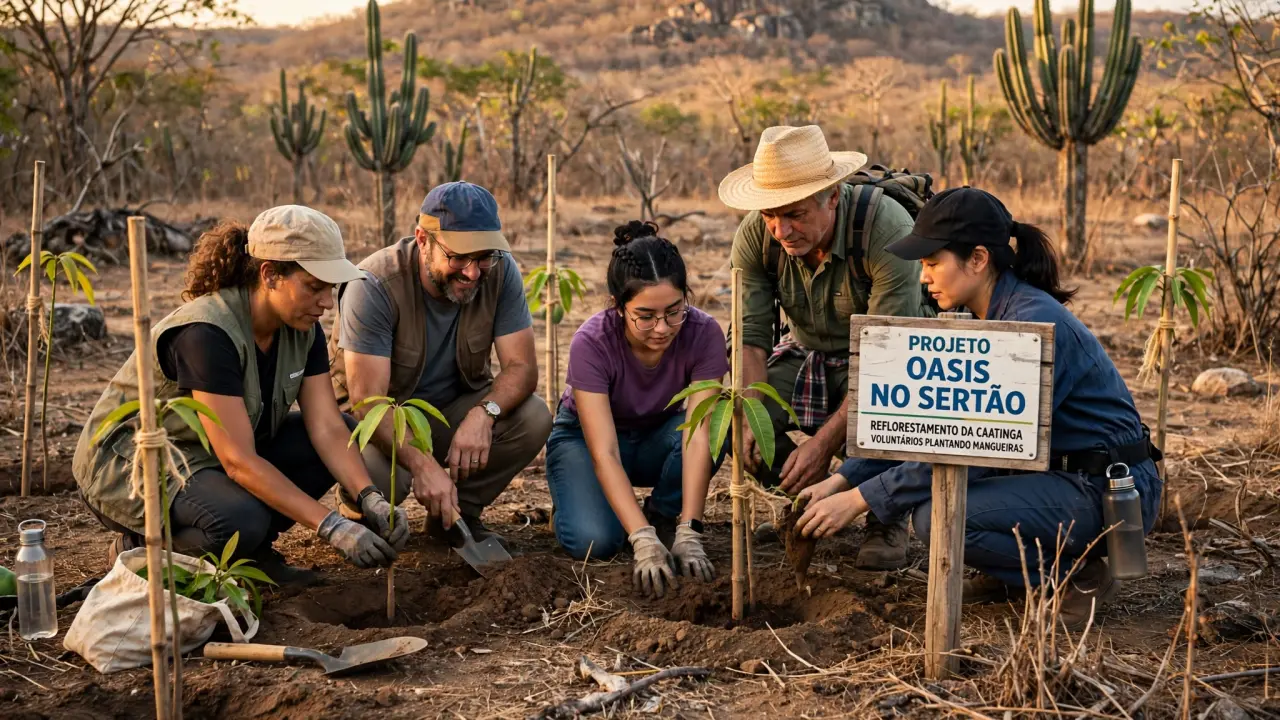
Mango is a fruit whose origin is the southern region of Asia. Being a typically tropical fruit, it was introduced by the Portuguese during the colonial period in Brazil with great success.
The tree that produces the mango is called the mangueira (mango tree).
The mango skin is smooth, with colors ranging from shades of red, orange, and yellow.
When ripe, the mango gives off a sweet aroma.
Its pulp is succulent (high water content), sweet and flavorful, and can be fibrous or smooth depending on the variety. It has only one large seed.
It is a fruit with a low calorie content.
Mango is rich in minerals and vitamins C, B5, A, and antioxidants. It also contains good amounts of iron, magnesium, and potassium.
It is consumed fresh and also in the production of juices, sorbets, and sweets.
The most common mango varieties in Brazil are: Haden, Tommy, Kent, Keitt, Atkins, and Palmer.
In addition, the fruit has many beneficial health properties, such as: helping to purify the blood, diuretic effects, combating bronchitis, expectorant effects, and combating stomach acidity.
In the Northeast, mango is cultivated in all states, particularly in irrigated areas of the semiarid region, which offer excellent conditions for crop development and high productivity and fruit quality. In 2007, Brazil ranked 7th among the world's largest mango producers, with India ranking 1st.
SCIENTIFIC CLASSIFICATION
Kingdom:
Plantae
Phylum: Magnoliophyta
Class: Magnoliopsida
Order: Sapindales
Family: Anacardiaceae
Genus: Mangifera